
Cloud bills have a way of growing quietly. Resources get created for a project and never removed, servers are sized for peak demand all day, and nobody is sure who owns which cost. Cloud infrastructure cost optimization is the ongoing practice of getting the most value from every pound or rupee you spend. Here are practical ways to reduce your costs without hurting performance.
1. Get Visibility First
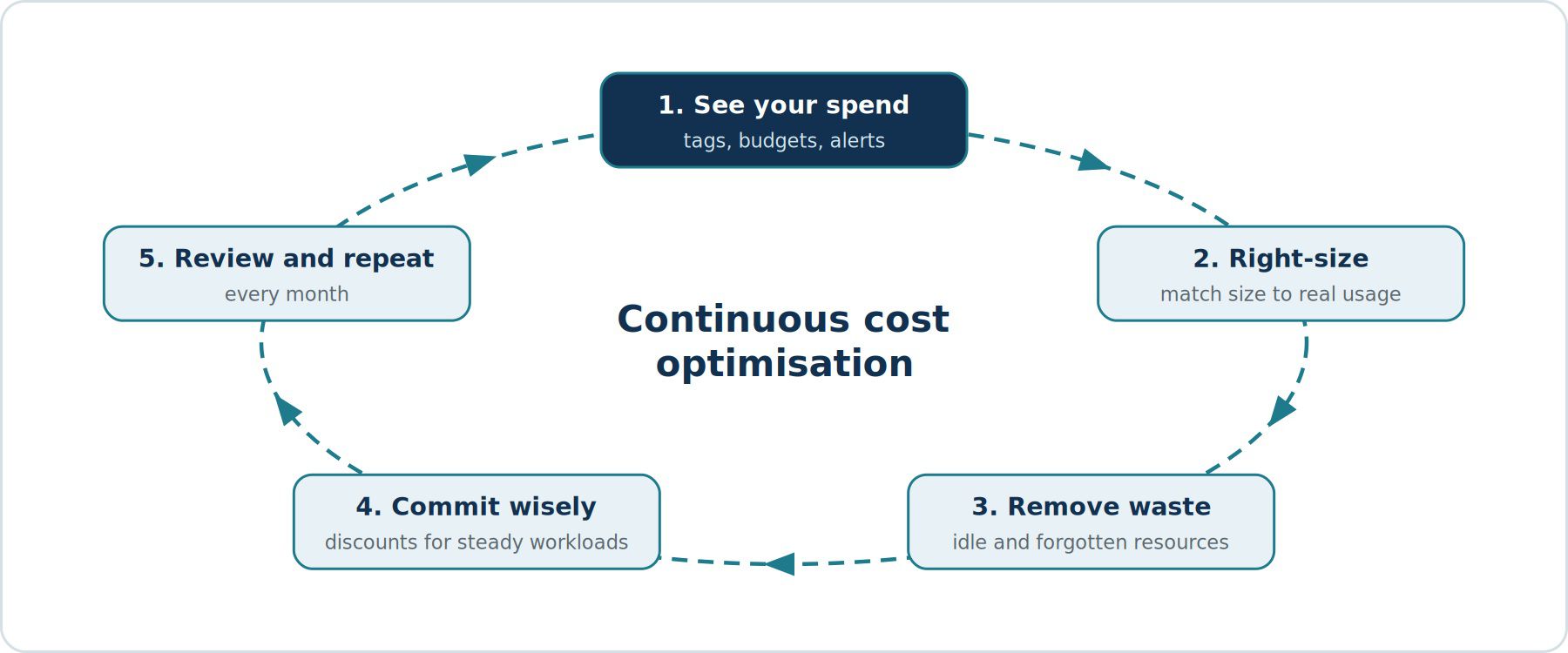
You cannot reduce what you cannot see. Use your provider's billing and cost tools to see spending by service, project and team. Tag every resource with an owner, project and environment so costs can be traced and discussed.
2. Set Budgets and Alerts
Create budgets for each project or team and set alerts that warn you before spending passes a threshold. Early warnings help you catch mistakes, such as a misconfigured service, before they turn into large bills.
3. Right-Size Your Resources
Many servers and databases are larger than they need to be. Review utilisation data such as CPU and memory use and move to smaller sizes where capacity is consistently unused. Check again after changes to confirm performance remains acceptable.
4. Remove Idle and Unused Resources
- Stopped or forgotten test servers.
- Unattached storage volumes and old snapshots.
- Unused load balancers and IP addresses.
- Old development environments that are no longer needed.
A regular clean-up, ideally on a schedule, often brings quick savings.
5. Schedule Non-Production Environments
Development and testing environments rarely need to run overnight or at weekends. Automatically shutting them down outside working hours can reduce their running cost significantly.
6. Use Commitment-Based Pricing for Steady Workloads
Providers offer discounts if you commit to a certain level of usage over a period of time, through options such as reserved instances or savings plans. These suit workloads that run continuously. Understand your usage patterns first, so you do not commit to capacity you will not use.
7. Consider Spot or Preemptible Instances for Flexible Work
Spare provider capacity is often offered at a lower price, with the condition that it can be reclaimed. This suits fault-tolerant tasks such as batch processing, but not critical services that must stay up.
8. Choose the Right Storage Tier
Not all data needs fast, expensive storage. Move infrequently accessed data to cheaper tiers and use lifecycle rules to archive or delete old data automatically.
9. Watch Data Transfer Costs
Data leaving the cloud or moving between regions can be charged. Review your architecture to keep traffic within the same region where possible, and use caching or a content delivery network to reduce repeated transfers.
10. Use Autoscaling
Autoscaling adds capacity when demand rises and removes it when demand falls, so you are not paying for peak capacity around the clock.
11. Build a Cost-Aware Culture
Cost optimisation works best when engineers, finance and management share responsibility. Review costs in regular meetings, share reports with teams and make cost one of the factors in design decisions. This practice is often called FinOps.
Common Mistakes to Avoid
- Cutting resources without checking performance impact.
- Making large commitments before understanding actual usage.
- Treating optimisation as a one-time project instead of an ongoing habit.
- Ignoring small recurring costs that add up over time.
Final Thoughts
Reducing cloud infrastructure costs does not mean sacrificing quality. Start with visibility, remove obvious waste, right-size what remains and then use pricing options that match your usage. Review regularly, as workloads and prices change. If you want an independent view, a cloud cost review can help identify savings you may have missed.