
Migrating to the cloud changes how your data and systems are protected. Cloud migration security needs attention before, during and after the move, because the migration period itself can create gaps. This article explains the most common risks and how to reduce them.
Understand the Shared Responsibility Model
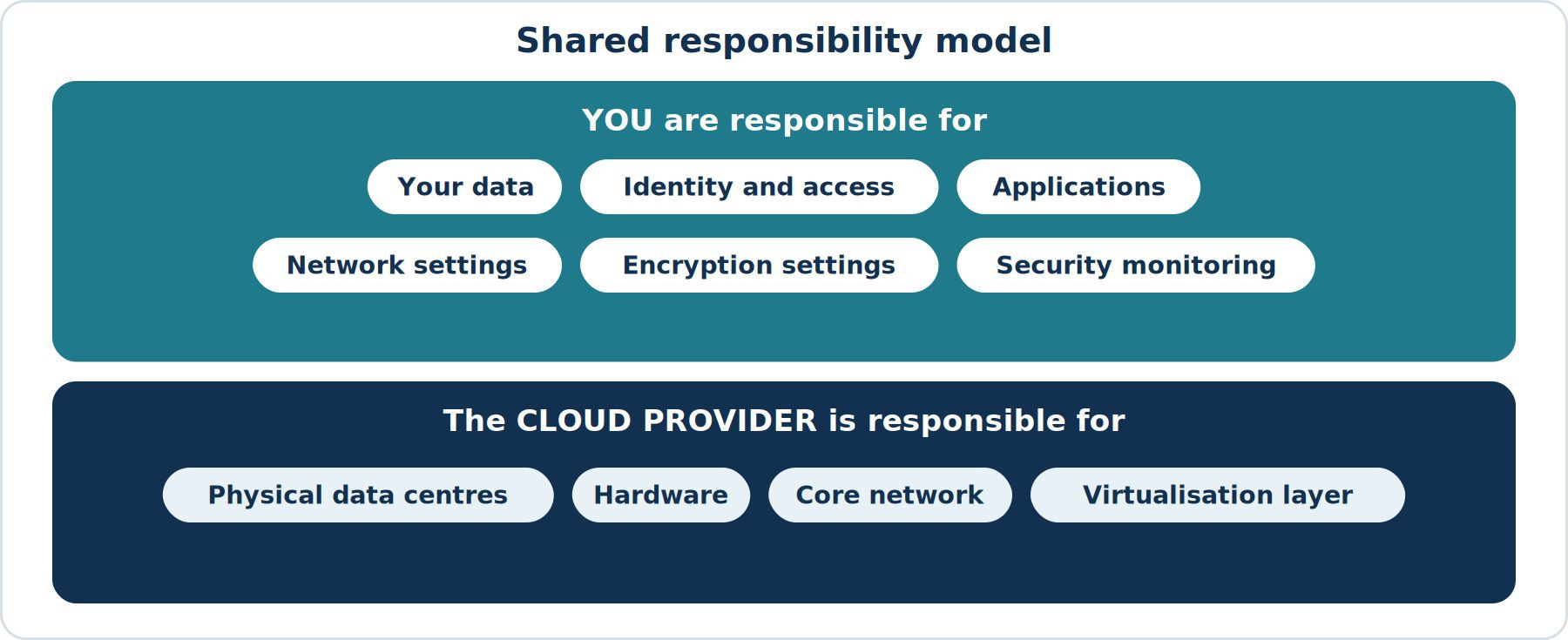
Cloud providers secure the underlying infrastructure, but you remain responsible for how you configure and use their services. That includes your data, user access, application security and network settings. Many cloud incidents come from customer-side configuration errors rather than provider failures.
Key Security Risks During Migration
1. Misconfigured Cloud Resources
Publicly exposed storage, overly open network rules and default settings are leading causes of cloud data exposure. Mitigation: use secure baseline templates, infrastructure as code, and automated configuration scanning. Review settings before any system goes live.
2. Weak Identity and Access Management
Over-privileged accounts and shared credentials make it easy for attackers, or mistakes, to cause serious damage. Mitigation: apply least-privilege access, require multi-factor authentication, remove unused accounts and avoid long-lived access keys where possible.
3. Data Exposure in Transit
Data moving between your environment and the cloud can be intercepted if not protected. Mitigation: use encrypted connections such as VPN or private connectivity, and encrypt data in transit and at rest.
4. Poor Visibility and Monitoring
If you cannot see what is happening in your new environment, you cannot detect threats. Mitigation: enable logging and audit trails from the start, centralise logs and set alerts for unusual activity.
5. Compliance and Data Residency Gaps
Regulated industries must control where data is stored and how it is handled. Mitigation: identify applicable regulations early, choose compliant regions and services, and document controls for audits.
6. Insecure Legacy Systems
Moving an application with known weaknesses simply relocates the risk. Mitigation: run vulnerability assessments before migration, patch what you can and isolate systems that cannot be fixed.
7. Inadequate Backup and Recovery
Assuming the cloud automatically protects against data loss is a common mistake. Mitigation: configure backups, keep copies separate from production access, and test restoration regularly.
Security Checklist for Your Migration
- Classify your data by sensitivity before moving it.
- Define security requirements for each workload.
- Enforce multi-factor authentication for administrators.
- Encrypt data in transit and at rest.
- Enable logging and monitoring before go-live.
- Test security controls during the pilot migration.
- Review configurations after cutover and on a regular schedule.
- Train staff on cloud security responsibilities.
Final Thoughts
Security should be designed into your migration plan from the start rather than added afterwards. By understanding shared responsibility, controlling access, protecting data and monitoring continuously, you can make your cloud environment at least as secure as the one you are leaving. For regulated or sensitive workloads, work with a cloud security specialist to validate your design.