
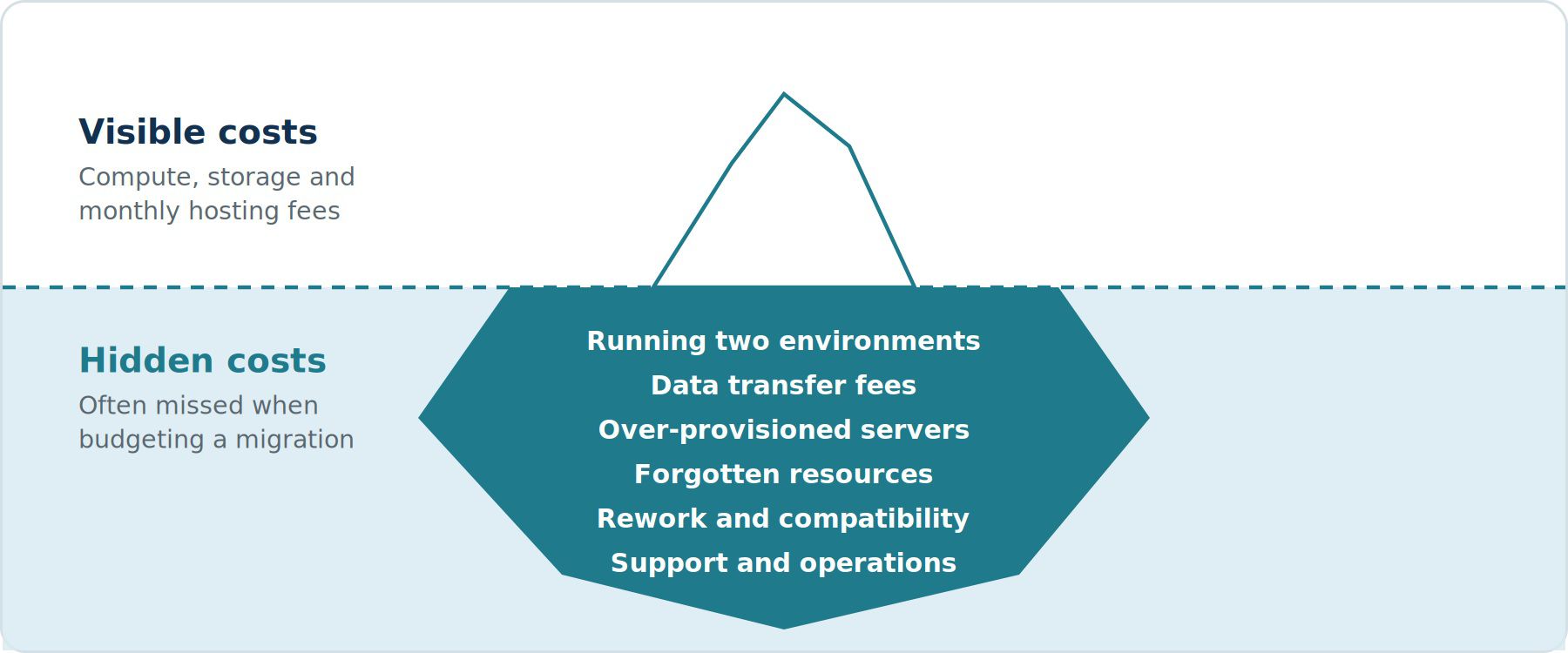
For small and medium enterprises, cloud migration cost is often the deciding factor. The cloud can reduce capital spending and make costs more flexible, but it is not automatically cheaper. Businesses that budget only for monthly hosting fees often get surprised later. This guide covers what to include in your budget and which hidden costs to watch for.
Core Costs to Budget For
- Cloud infrastructure: compute, storage, databases and networking, usually billed on usage.
- Migration tooling and services: replication tools, assessments and any consulting or implementation support.
- Staff time: internal effort for planning, testing and training, which is easy to overlook.
- Licensing: some software licences change when moved to the cloud, so review each one.
- Security and compliance: monitoring, backup, identity management and audit requirements.
- Training: your team needs new skills to operate cloud environments safely.
Hidden Expenses to Avoid
Running Two Environments at Once
During migration you usually pay for both the old environment and the new one. Plan for this overlap period in your budget, and shorten it with a clear cutover schedule.
Data Transfer and Egress Fees
Moving data into the cloud is often free or cheap, but data leaving the cloud or moving between regions can be charged. Check your provider's pricing for data transfer, especially for applications that serve large files or exchange data with other systems.
Over-Provisioned Resources
Teams often choose large servers to be safe and then never review them. Idle or oversized resources are one of the most common sources of cloud waste. Right-size after you see real usage.
Unused and Forgotten Resources
Test servers, old snapshots and unattached storage keep billing until someone removes them. Use tagging and regular reviews to find them.
Rework and Compatibility Issues
Applications that do not run well in the cloud may need changes. Discovering this mid-project can raise costs and delay timelines, which is why an upfront assessment and a pilot migration are valuable.
Support and Operations
Cloud shifts responsibility rather than removing it. You still need monitoring, patching of anything you manage, backup testing and someone responsible when problems occur. Budget for ongoing management, whether in-house or through a managed service provider.
How to Keep Cloud Costs Under Control
- Estimate with the provider's pricing calculator, then add a contingency buffer.
- Set budgets and billing alerts from day one.
- Tag every resource by project and owner so spending is visible.
- Review usage regularly and right-size resources.
- Consider reserved or committed-use pricing for steady workloads, after you understand your usage.
- Turn off non-production environments outside working hours.
Final Thoughts
The real cloud migration cost includes more than hosting fees. SMEs that plan for transition overlap, data transfer, people and ongoing management avoid the biggest surprises. Treat cost control as an ongoing practice rather than a one-time estimate, and review spending after every stage of the project.